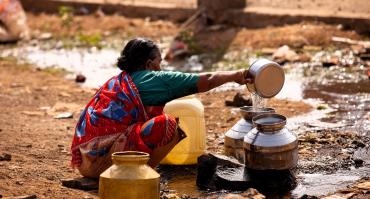
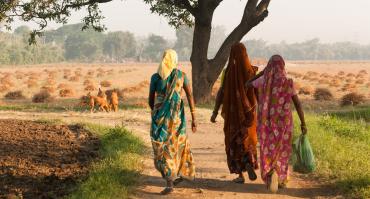
Evidence from India suggests that women tend to wake earlier and eat later than men, leading to reduced sleep, leisure, and social time – which worsens physical and mental health outcomes. These disparities persist across economic groups, remain larg...
Despite recent gains due to rural self-employment, India’s female labour force participation remains constrained by entrenched social norms and a limited availability of quality jobs – keeping the gender gap in work persistently wide.
Across Africa, early first-births remain the norm even as educational attainment has increased. Evidence from Zambia shows misperceptions and medical mistrust may be a key reason why.
A government-led, state-wide programme in India (the SHE Pad Scheme) which provided free sanitary pads in schools significantly reduced dropout rates among adolescent girls, primarily by increasing school attendance.
Can an intermediate, less severe action serve as a stepping stone to eliminating a harmful norm? Research on female genital cutting in Somalia suggests that the intermediate action risks becoming the new norm.
Half of South Africa’s gender pay gap comes from women sorting into low-paying firms, with low formality and high churn being key to understanding this dynamic.