Evidence from Pakistan shows that impact investments in education consistently improve the lives of children, while generating financial returns for investors.
While access to schooling has improved globally, learning outcomes remain shockingly poor—particularly in sub-Saharan Africa and South Asia. How can foundational learning help bridge this gap?
Promoting sustained effortful mental activity in Indian primary schools markedly improved student cognitive and educational outcomes across a wide range of subjects.
Evidence from Zimbabwe suggests that dialogue-based engagement campaigns can be effective in increasing enrolment and learning, which is consistent with improving perceptions around the value of girls’ education. These campaigns can also be offered a...
Every year, developing countries spend considerable resources on training teachers—yet these efforts often prove unfruitful. New research from a large-scale, pedagogy-focused teacher coaching programme in rural Peru offers promising results for achie...
Why do policymakers choose education reforms that aren’t supported by evidence? And how can researchers work with them to implement interventions with better outcomes? These are thorny questions often faced by education researchers and stakeholders w...
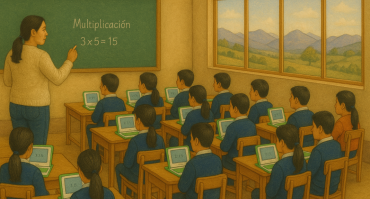
Long-term research on the One Laptop per Child programme reveals that providing laptops to students did not have a positive impact on educational outcomes, likely driven by lack of effects on cognitive skills and limited classroom adoption.
Despite the increased access to primary education in sub-Saharan Africa, secondary school enrolment and completion remains low. Evidence from Uganda reveals that universal secondary school policies can play a transformative role in women’s empowermen...